Hair Loss After Egg Retrieval: Causes, Solutions & Timeline
BY TRYBELLO
May 21, 2026

Key Takeaways
- Hair loss after egg retrieval is a temporary form of telogen effluvium, triggered when the sharp drop in estrogen after IVF pushes a much larger share of follicles than usual into the resting phase.
- Shedding usually begins 4 to 8 weeks after retrieval, peaks between 8 and 16 weeks, and feels sudden because daily loss can climb from around 100 hairs to as many as 300.
- Recovery comes from supporting the scalp while the cycle resets with Trybello Hair Helper Spray, gentle handling, balanced nutrition, and avoiding heat tools or tight hairstyles that add stress to fragile strands.
- About 95% of acute cases resolve within six months, with full density returning over 6 to 9 months as follicles re-enter the growth phase and new hair grows in at roughly half an inch per month.
- Trybello Hair Helper Spray is a leave-in scalp treatment with biotin, caffeine, and castor oil that supports scalp circulation and the appearance of fuller, stronger hair through the post-IVF regrowth phase.
Hair Loss After Egg Retrieval Is Real and More Common Than You Think
Hair loss after egg retrieval is a form of telogen effluvium, triggered when the steep estrogen rise during stimulation is followed by a sudden drop that signals a large share of follicles to shift into the resting phase. Shedding usually starts 4 to 8 weeks after the procedure, peaks between weeks 8 and 16, and resolves in around 6 months for most women, with full density returning over 6 to 9 months as the cycle resets. How heavy the shedding feels depends on hormone sensitivity, nutrition, and how gently the hair is handled while regrowth catches up.
Post-IVF shedding is one of the most common and least talked about side effects of fertility treatment, which is why so many women are caught off guard when they first notice it in the brush or shower.
If you are recovering from a recent retrieval, this guide walks through the full timeline, the science behind the shedding, and the daily habits and scalp support that make the regrowth phase easier.
“Doctor-Approved Natural Spray Rapidly Boosts Growth & Thickness.
Why 100,000+ Women Are Switching to Trybello!"
Join over 100,000 happy customers who've transformed their hair with our doctor-formulated spray in just 12 weeks, rated 4.8/5 by 40,000+ real users.
Proven Natural Ingredients
- • Caffeine Extract – Blocks DHT and boosts blood flow to follicles
- • Biotin – Direct scalp absorption, no pills needed
- • Castor Oil – Soothes inflammation and locks in moisture
- • Rice Water Extract – Strengthens hair and reduces shedding
120-Day Growth Guarantee: No results? 100% money back, no questions asked.


Why Does Egg Retrieval Trigger Hair Loss?
Egg retrieval exposes the body to intense hormonal shifts, especially sharp increases and sudden drops in estrogen. Since estrogen helps maintain the hair growth phase, this sudden withdrawal can disrupt the hair cycle and trigger shedding.
The Role of Hormonal Fluctuations in Hair Shedding
Hair follicles are highly sensitive to hormones. Increased estrogen during stimulation prolongs the growth phase, but the post-cycle drop sends a signal for many hairs to stop growing and shift into the shedding phase at the same time.
What Telogen Effluvium Actually Is
Telogen effluvium is a temporary form of hair shedding that occurs when a higher-than-normal number of hairs enter the resting phase. Instead of the usual 15%, a much larger portion of hair shifts into shedding after a physical or hormonal stressor like IVF.
How Fertility Medications Affect Hair Follicles
Fertility medications create hormone levels far beyond normal ranges. This includes high estrogen during stimulation, followed by a sharp drop, along with added effects from progesterone and other medications. Together, these changes act as a stress signal to hair follicles, disrupting normal growth patterns.
Why Shedding Starts Weeks After the Procedure
Hair shedding usually appears weeks later because hair doesn’t fall out immediately after the hormonal trigger. Instead, once follicles shift into the resting (telogen) phase, they typically remain there for about 2–3 months before the hair is naturally released.
The Hair Regrowth Timeline After Egg Retrieval
Hair shedding after egg retrieval follows the same biological pattern as acute telogen effluvium, a temporary shift in the hair cycle triggered by hormonal stress. In most cases, about 95% of acute cases resolve within 6 months, as follicles naturally return to their normal growth cycle once the trigger passes.

Post-IVF hair shedding often begins weeks after egg retrieval due to delayed hair cycle changes.
Weeks 0–4: Trigger and Follicle Shift
In the first few weeks after egg retrieval, there is usually no visible hair loss yet. However, internally, a large number of follicles (sometimes up to ~70%) shift prematurely from the growth (anagen) phase into the resting (telogen) phase due to hormonal disruption.
Although no shedding is visible at this stage, the hair cycle has already been altered. The follicles remain intact, but they temporarily pause active growth as the body adjusts to the hormonal changes.
Weeks 4–8: Shedding Begins
Between 4 and 8 weeks post-procedure, the first noticeable shedding begins. Hairs that entered the telogen phase start loosening and are shed gradually.
Daily shedding can increase significantly, sometimes from a normal ~100 hairs per day to up to 300 hairs daily, which may be seen in the brush, shower, or pillow. While this can feel alarming, it reflects a synchronized cycle shift rather than permanent loss.
Weeks 8–16: Peak Shedding Phase
The most intense phase typically occurs between 8 and 16 weeks after egg retrieval. This is when shedding is most visible, and hair density may appear temporarily reduced, especially at the crown.
Even though shedding can feel heavy during this period, the follicles remain healthy and active beneath the scalp. Telogen effluvium does not usually affect the hairline or cause permanent follicle damage; it is a diffuse, reversible process.
After 4 Months: Stabilisation and Early Regrowth
Around the 4-month mark, shedding usually begins to slow as follicles start re-entering the anagen (growth) phase. This is the beginning of recovery. Fine “baby hairs” may start to appear, although overall density changes are still subtle. Most people notice that daily shedding becomes significantly less dramatic during this stage.
6 Months and Beyond: Recovery Phase
In most cases, acute telogen effluvium resolves within 6 months, including IVF-related triggers like egg retrieval. By this point, shedding has largely normalized, and visible regrowth becomes more consistent.
Hair grows at roughly half an inch per month, so full cosmetic recovery (density and volume restoration) often takes 6–9 months or longer, depending on individual health, nutrition, and stress levels.
What Actually Helps With Hair Loss After Egg Retrieval?
While the regrowth timeline is largely determined by your biology, there are still practical ways to support recovery and reduce excessive shedding. The goal is not to force immediate regrowth but to create the right internal and external environment so your follicles can return to their normal cycle more smoothly.
Think of it as a dual approach that combines internal nourishment with external care. Both matter, and ignoring either can slow down overall recovery.
Nutritional Support That Promotes Hair Recovery

Stress, nutrition, and hormones all influence how quickly hair regrowth happens.
Hair follicles are highly active and need a steady nutrient supply to function properly. After an IVF cycle, temporary imbalances can make shedding more noticeable for a while. Key nutrients like iron (especially ferritin) are important since low levels are linked to shedding. Protein supports keratin production, while zinc helps follicle health and cycling. Biotin supports hair structure, and vitamin D plus omega-3s contribute to scalp and follicle health.
Scalp and Hair Care Adjustments to Reduce Breakage
Scalp and hair care adjustments can help reduce breakage during periods of active shedding when strands are more fragile. Avoiding harsh brushing, tight hairstyles, heat tools, and chemical treatments helps limit extra stress on the hair.
Using a wide-tooth comb, sulfate-free shampoo, and loose hairstyles can reduce breakage, while silk or satin pillowcases help minimize friction during sleep.
Hair growth serums with ingredients like caffeine, peptides, or plant extracts may also support scalp circulation and create a healthier environment for regrowth when used alongside gentle care.
When to Consider Topical Treatments
Some women ask their dermatologist about prescription topicals to support regrowth, since these are among the most studied options for extending the growth phase. After egg retrieval, any prescription option should be discussed with a healthcare professional first, especially if pregnancy is still possible or fertility treatment is ongoing.
For women who have completed their IVF cycle, a dermatologist may sometimes recommend a topical as part of a broader recovery plan to encourage regrowth and improve density over time. Trybello Hair Helper Spray fits in as a gentle, daily scalp option, formulated with biotin, caffeine, and castor oil to support scalp circulation and the appearance of fuller, stronger hair through the regrowth phase.
The Easiest Way to Support Your Hair Through Post-IVF Recovery
The most effective response to hair loss after egg retrieval is consistent scalp support and steady nutrition while the hair cycle resets. Since post-IVF shedding is a temporary form of telogen effluvium, the goal is not aggressive intervention but daily habits that reduce breakage, keep the scalp healthy, and let follicles return to their normal growth phase on their own.

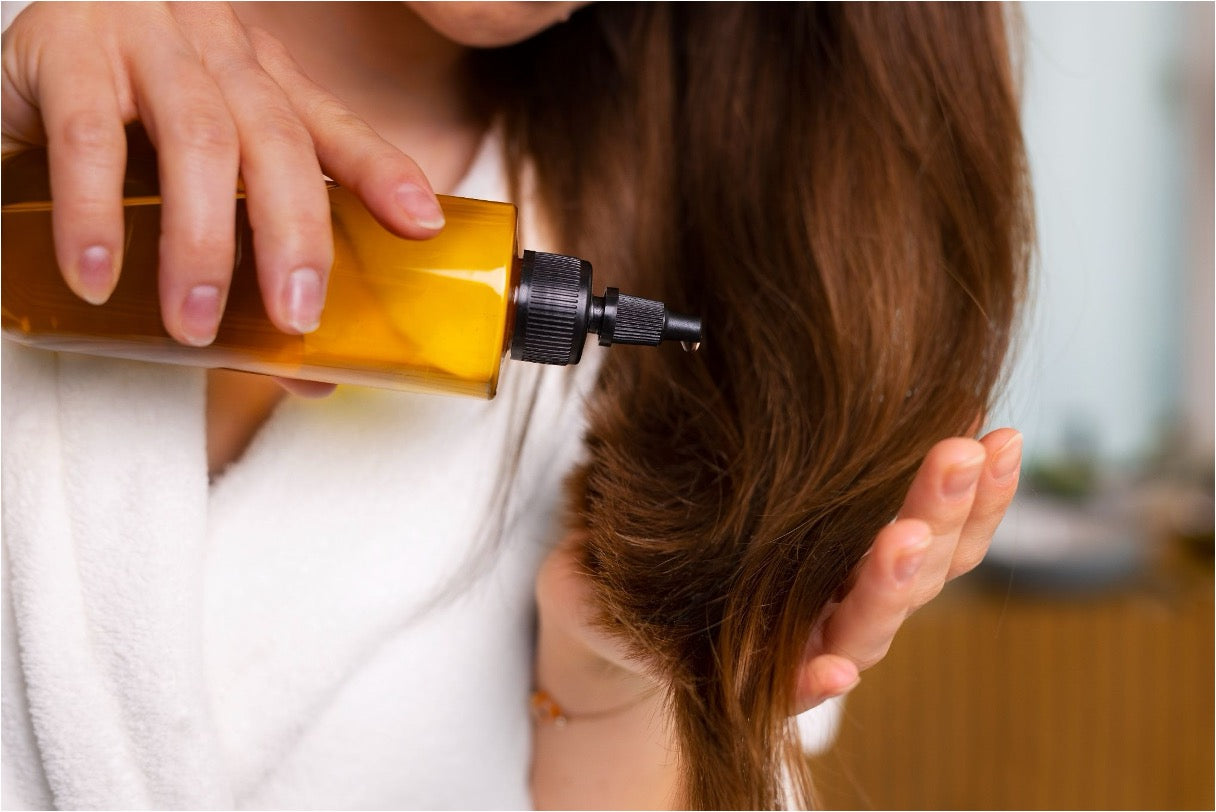
Trybello Hair Helper Spray supports scalp health with ingredients like biotin and caffeine, helping hair look fuller and stronger during regrowth.
Trybello Hair Helper Spray fits into that recovery as a lightweight, leave-in scalp treatment with biotin, caffeine, and castor oil. Its non-greasy formula absorbs quickly and slots into a daily routine alongside gentle handling and balanced nutrition, helping hair look fuller and stronger as the body stabilizes after the hormonal shifts of IVF.
Frequently Asked Questions (FAQs)

Trending Topics




*Disclaimer: Individual results may vary. The information provided in this article is for educational purposes only and is not intended as medical advice. Consult a healthcare professional before starting any new hair or lash care regimen, especially if you have sensitivities or underlying health conditions. Product pricing is subject to change. For full terms, visit Trybello.com.

See our latests posts #TRYBELLO